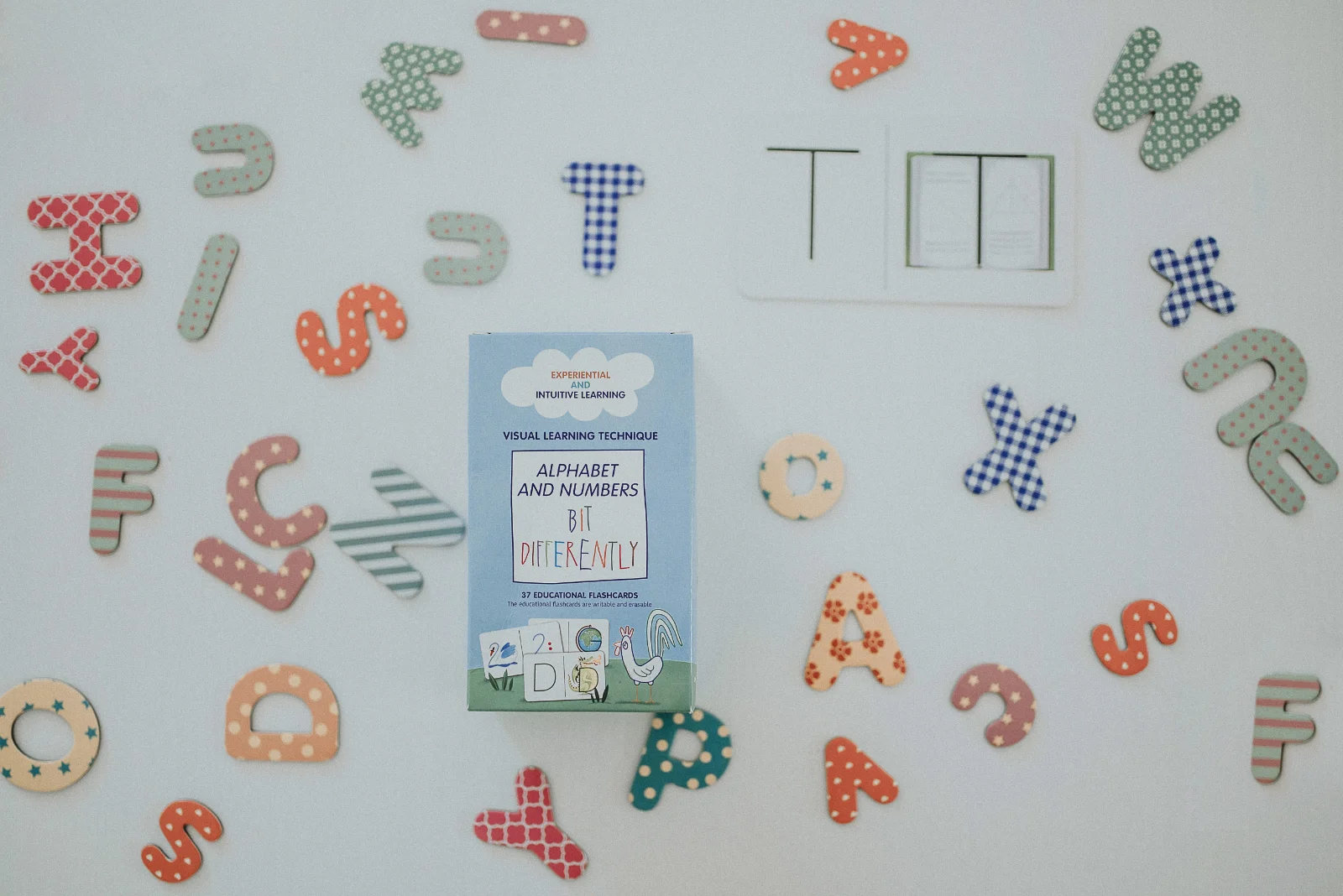
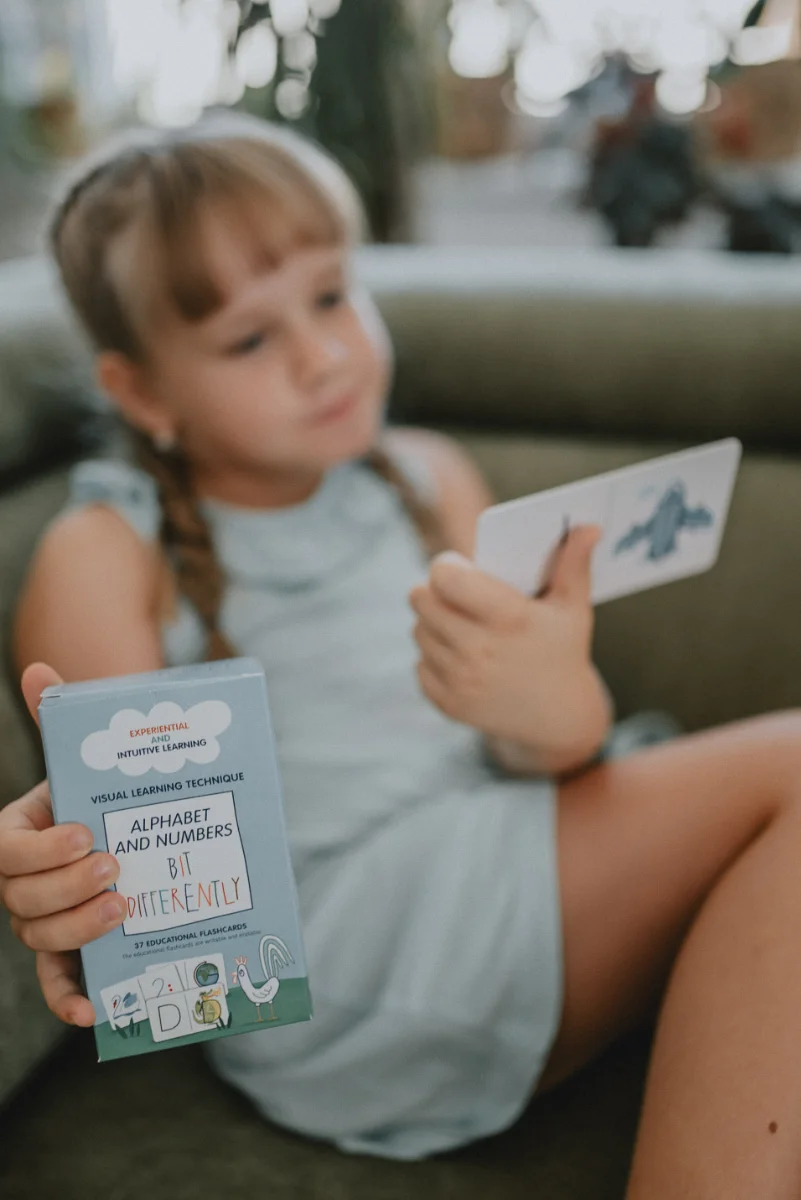
The ALPHABET BIT DIFFERENTLY makes it easy to learn the alphabet:
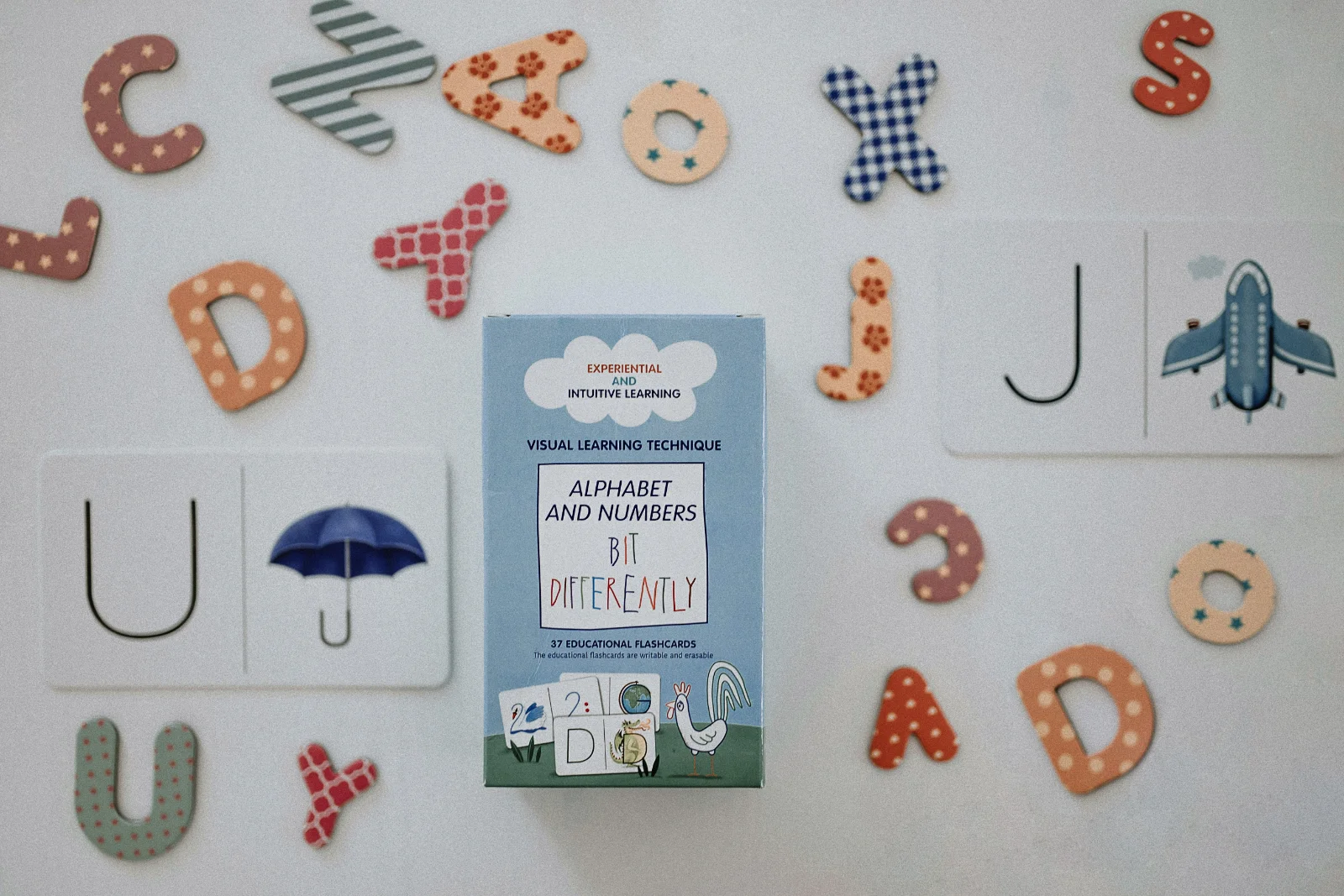
Visual matching

Phonetic matching

The story
The ALPHABET BIT DIFFERENTLY supports and develops:




The surface of the flashcards can be written on and erased (with a marker provided for this purpose).
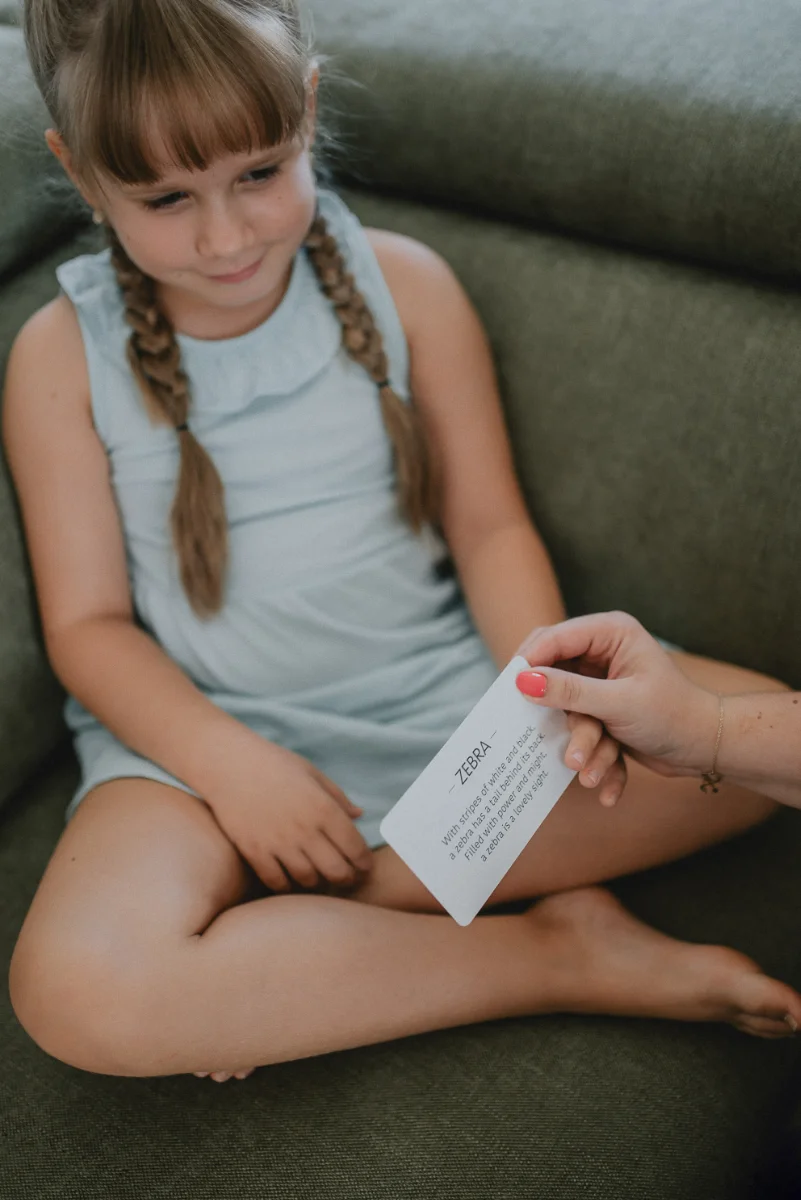
Under the supervision of a parent/teacher, the child can practise the basic form of the letters and graphomotor skills directly on the flashcard.
- The pack contains: 37 flashcards, of which: 26 letters of the alphabet (from A to Z), 11 numbers (from 0 to 10)
- Size of the flashcards: 7.5 x 13 cm
- Thickness of the cards: 1 mm
- Made in the EU

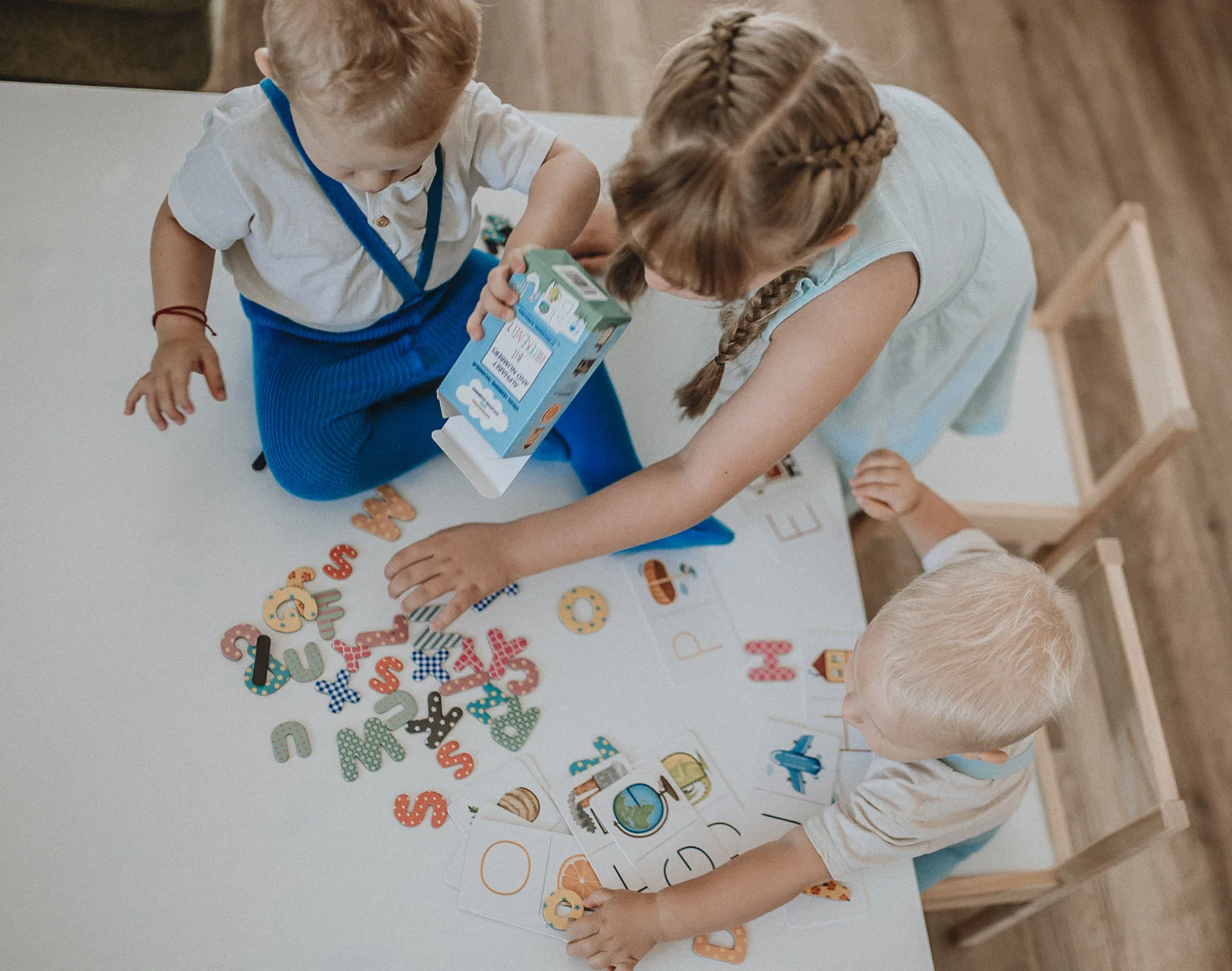
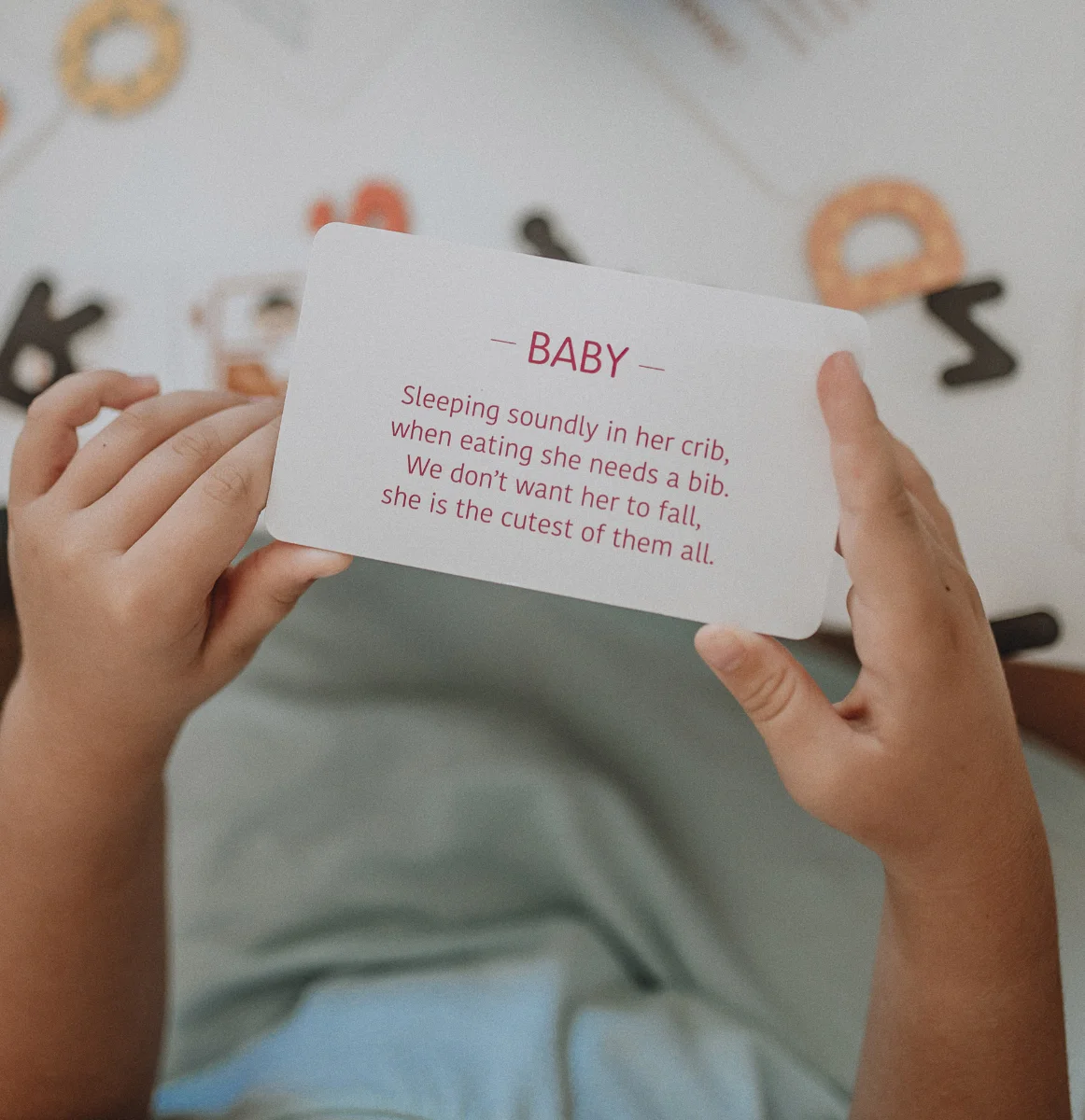
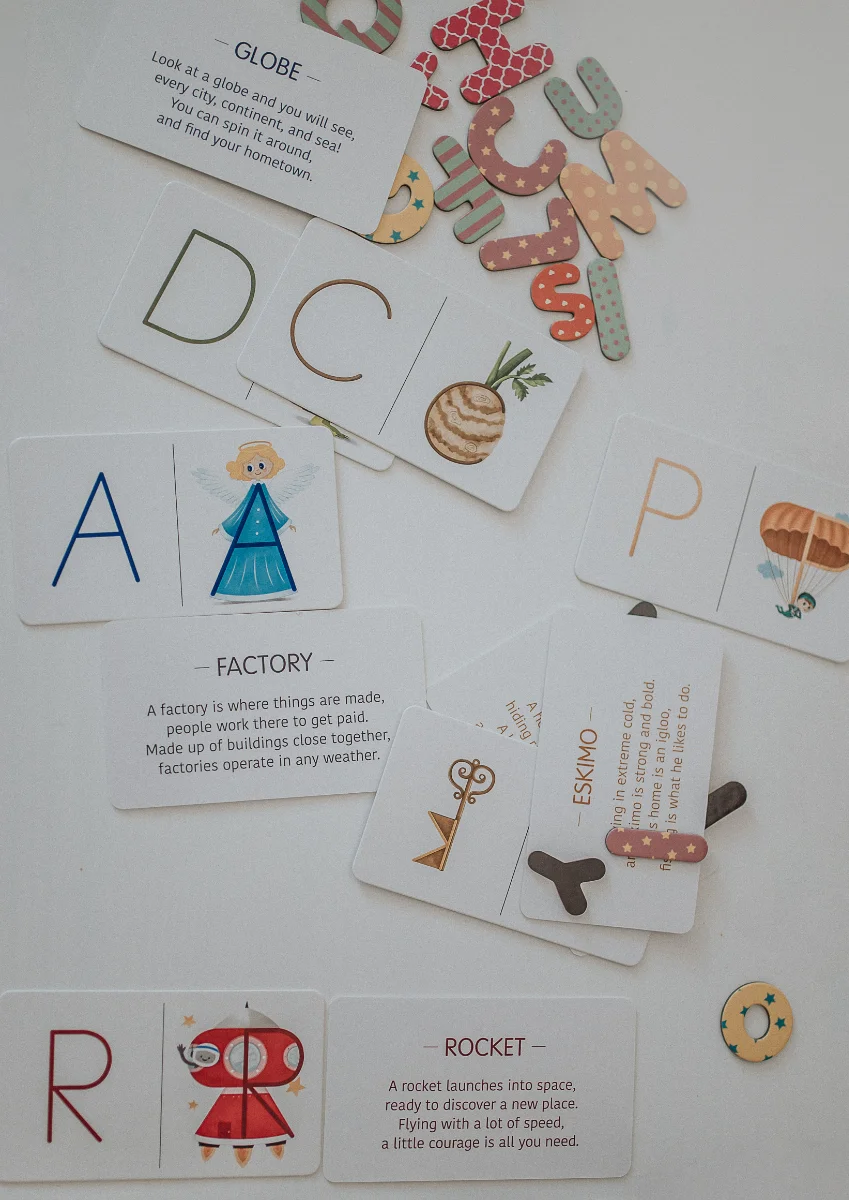
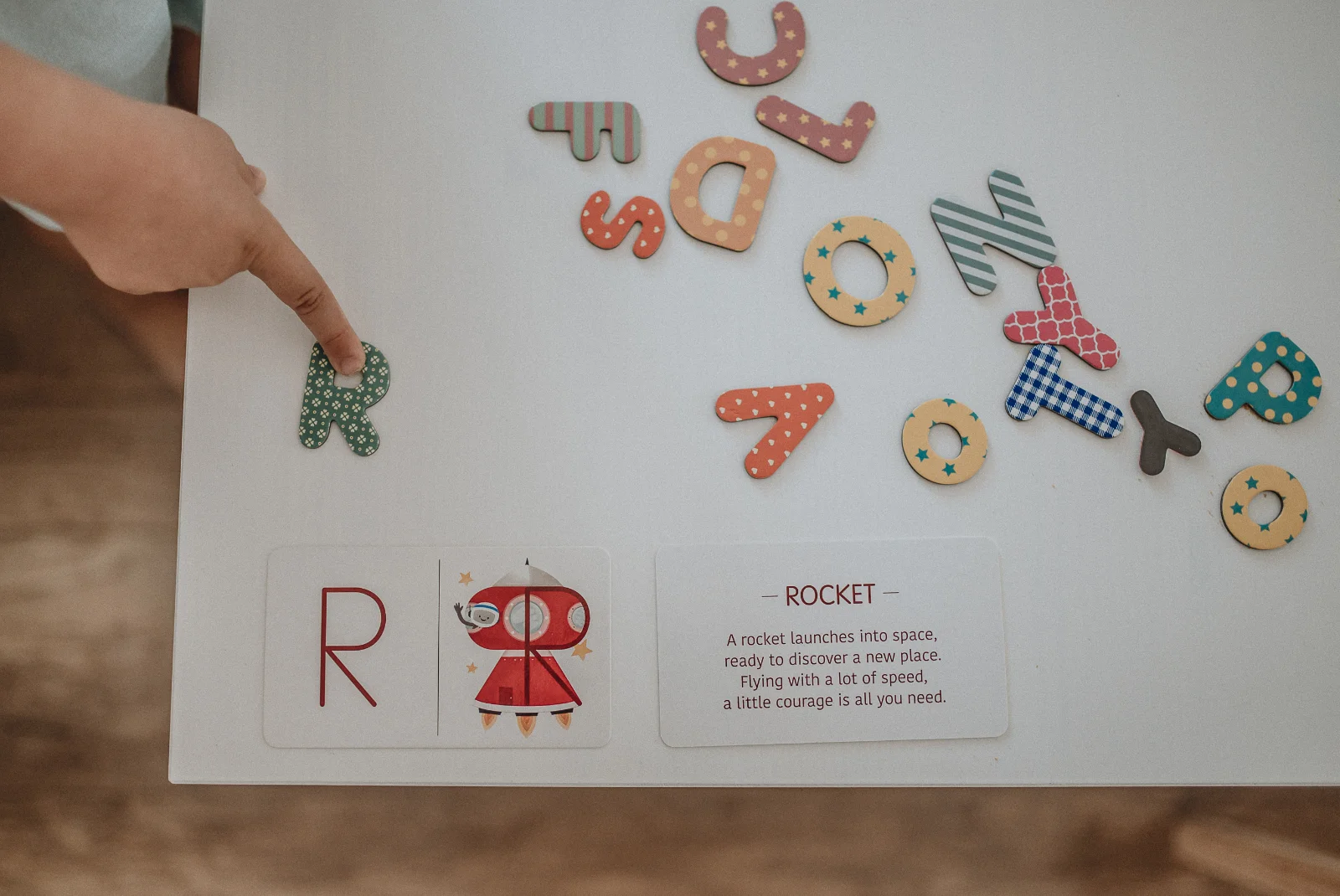
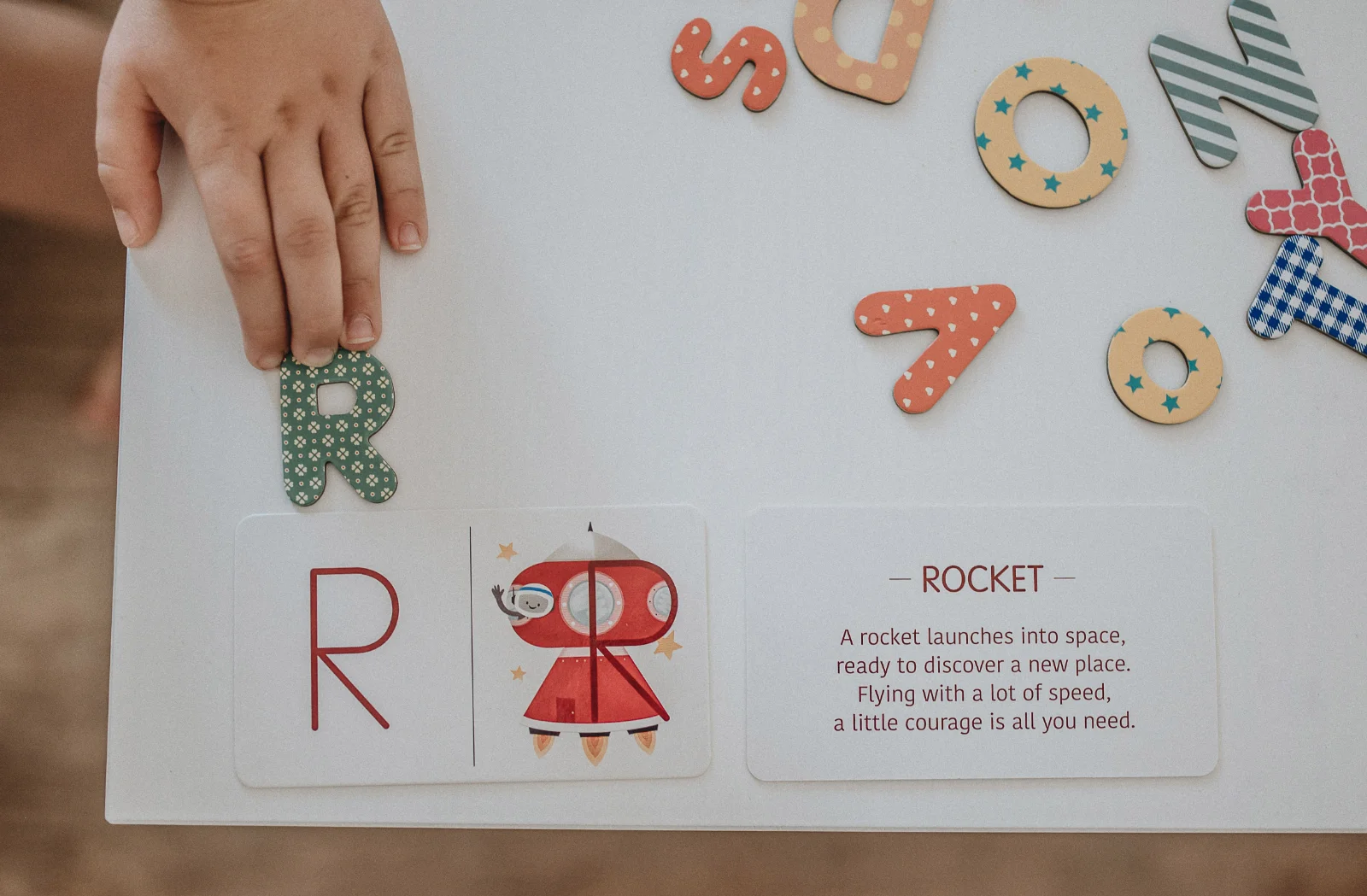
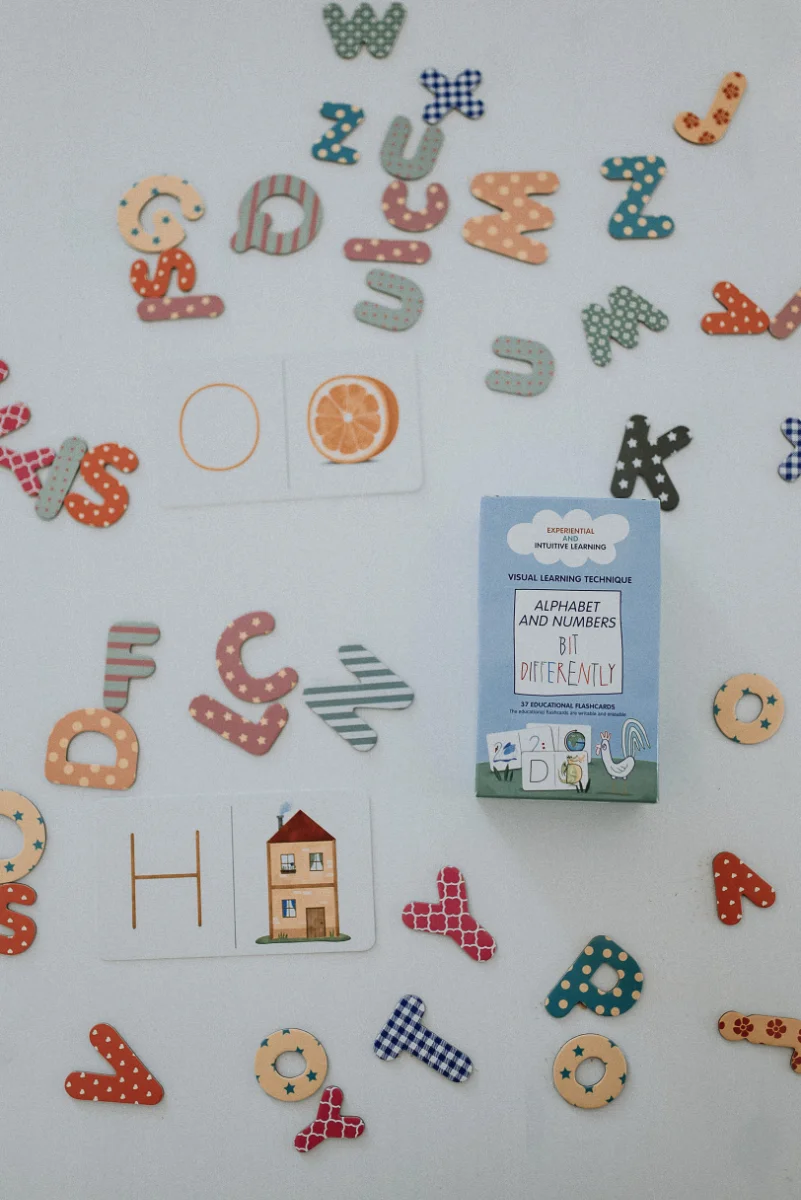
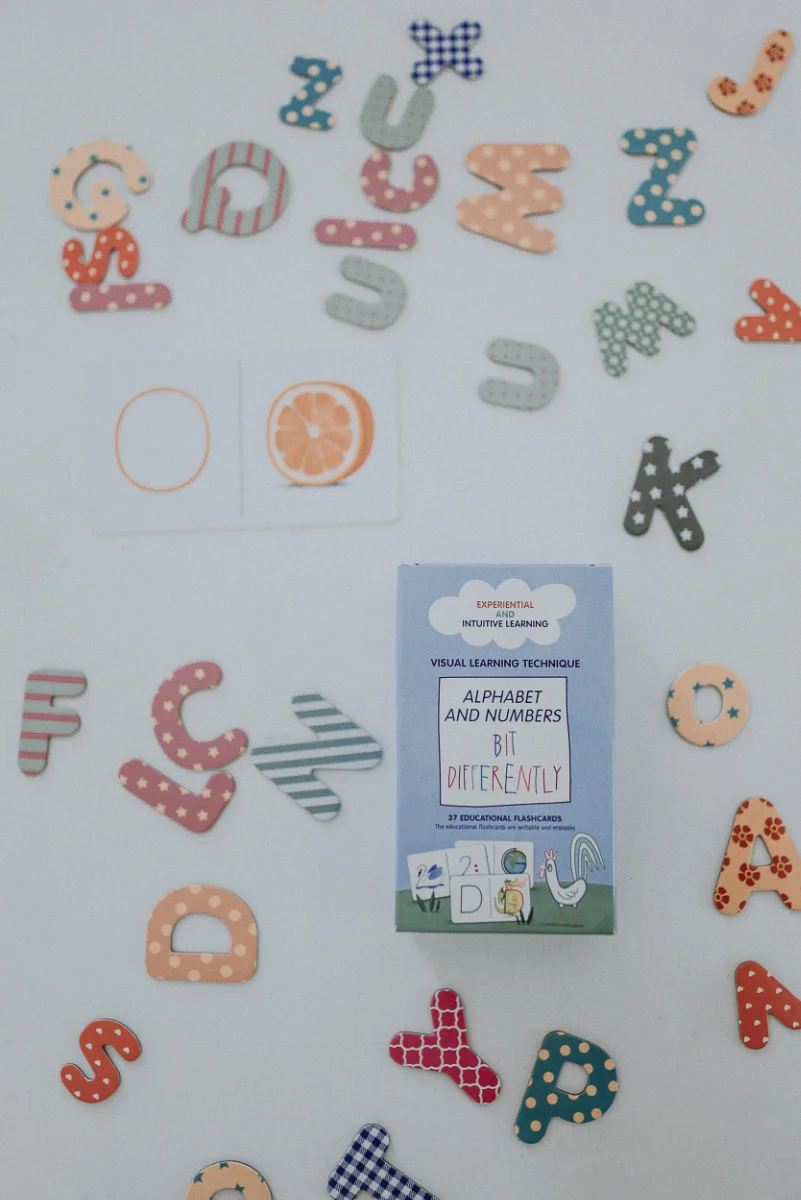
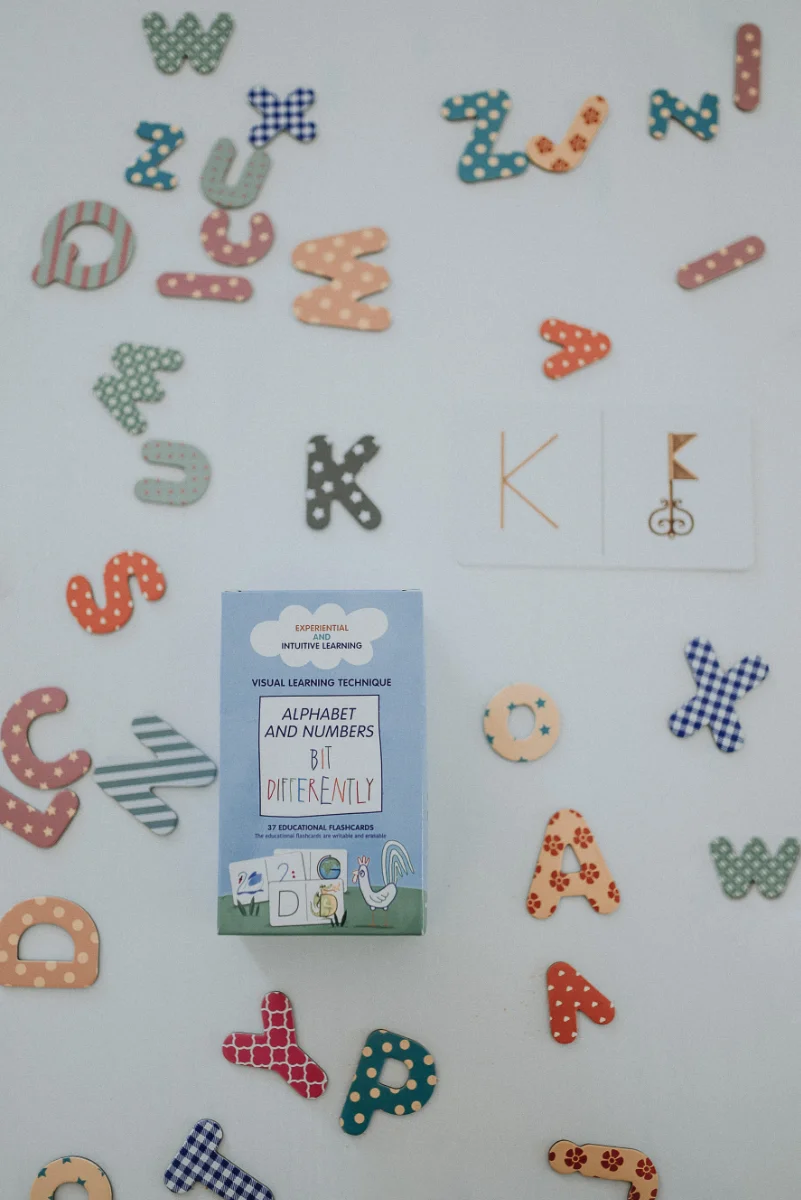
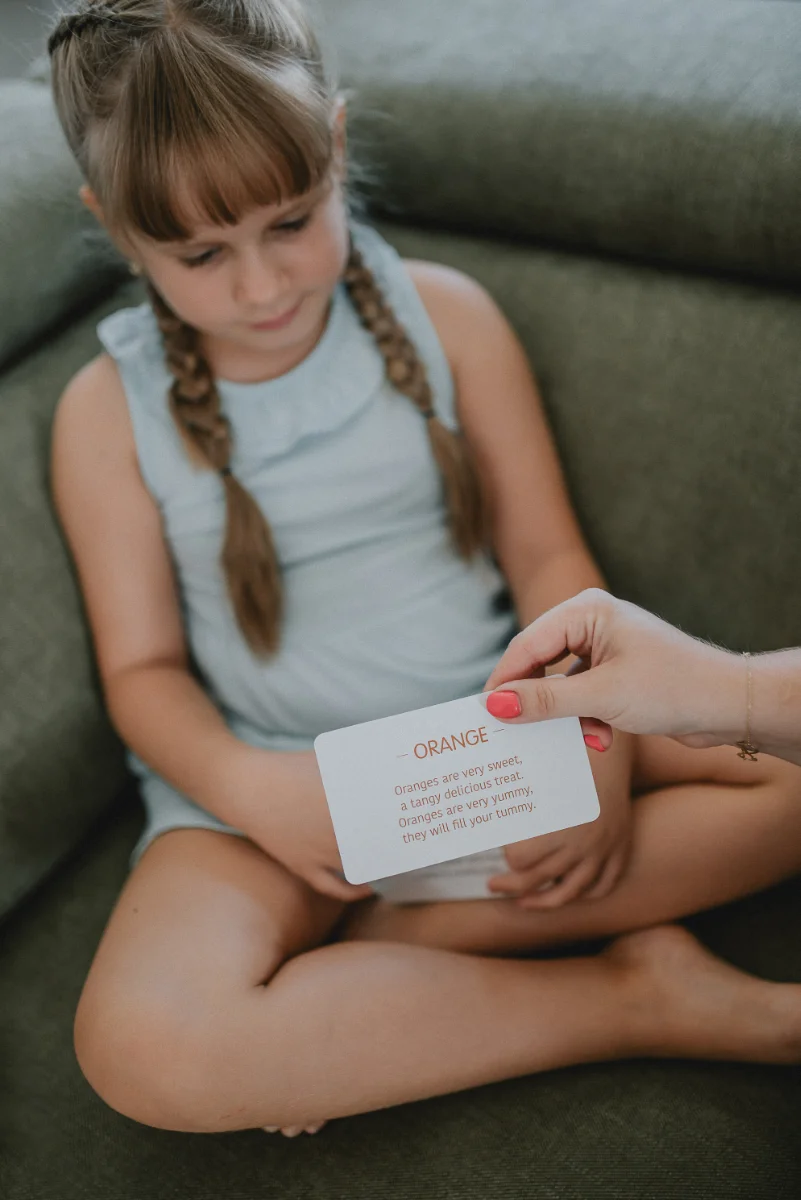
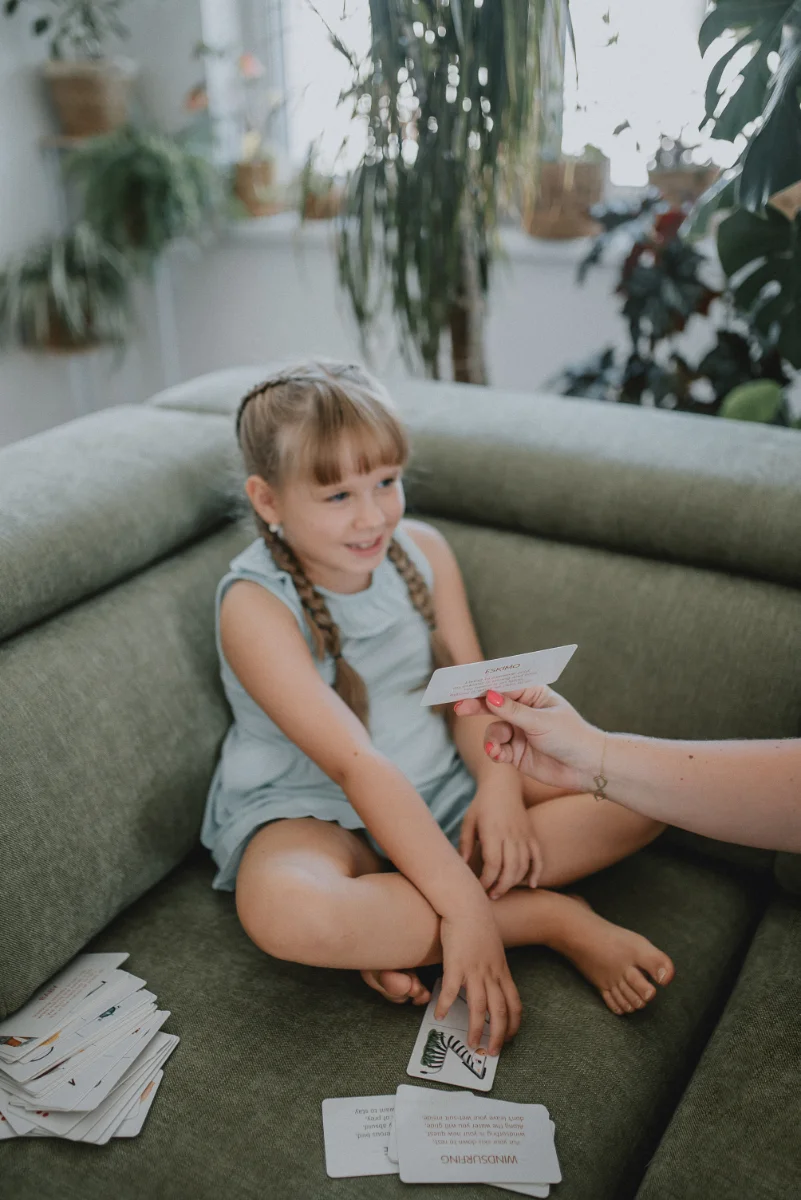
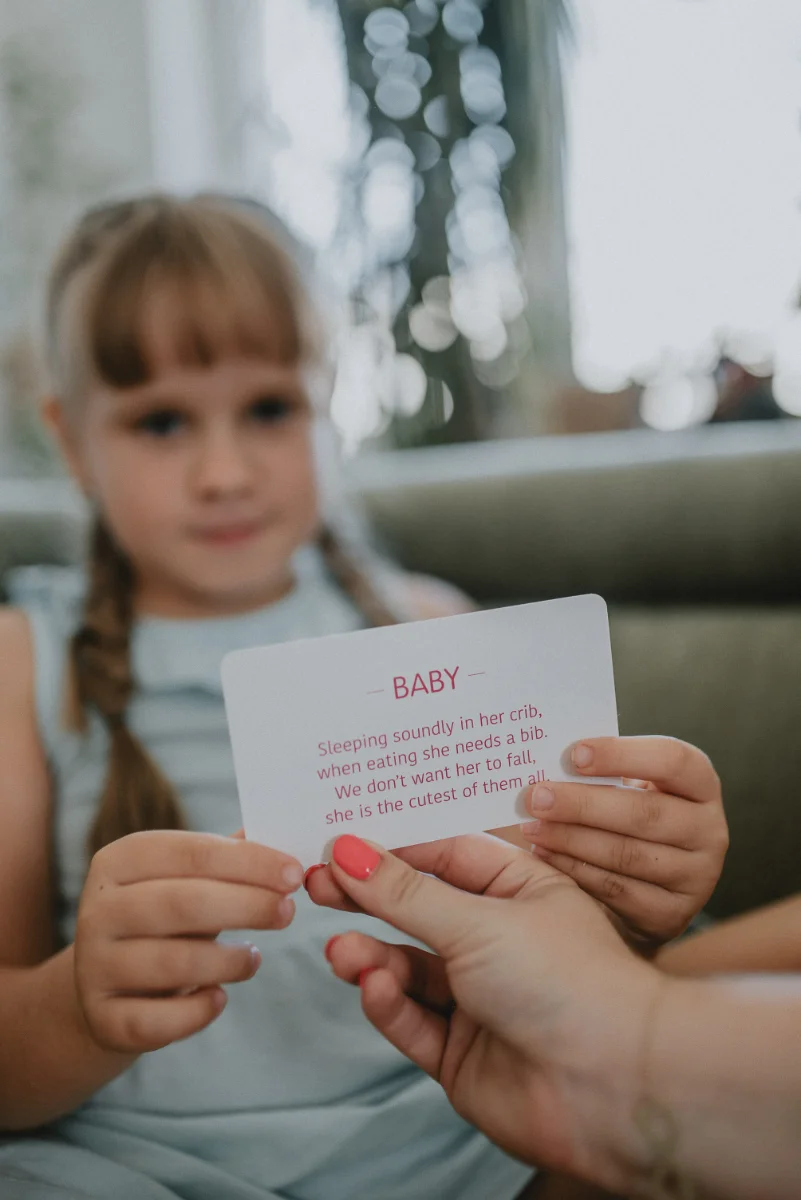
Why is the ZIMOVA SYSEM so effective?
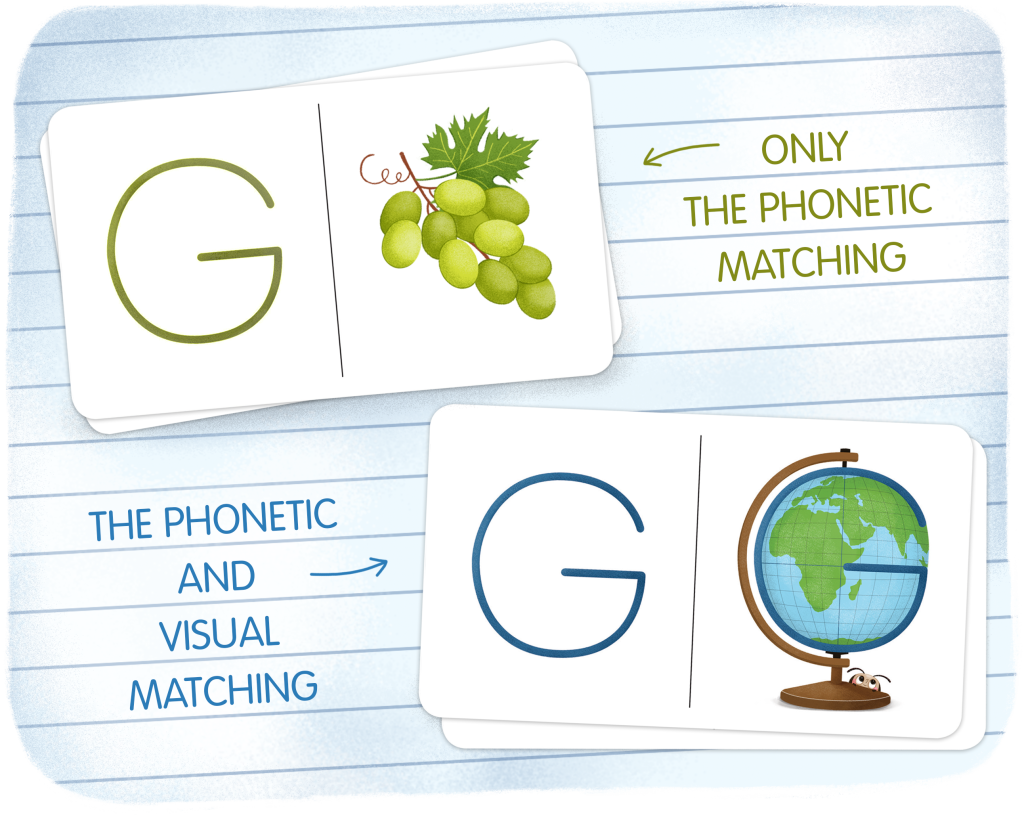
This is because only the phonetic matching of letter and picture is not always enough for the child (G for Grape).
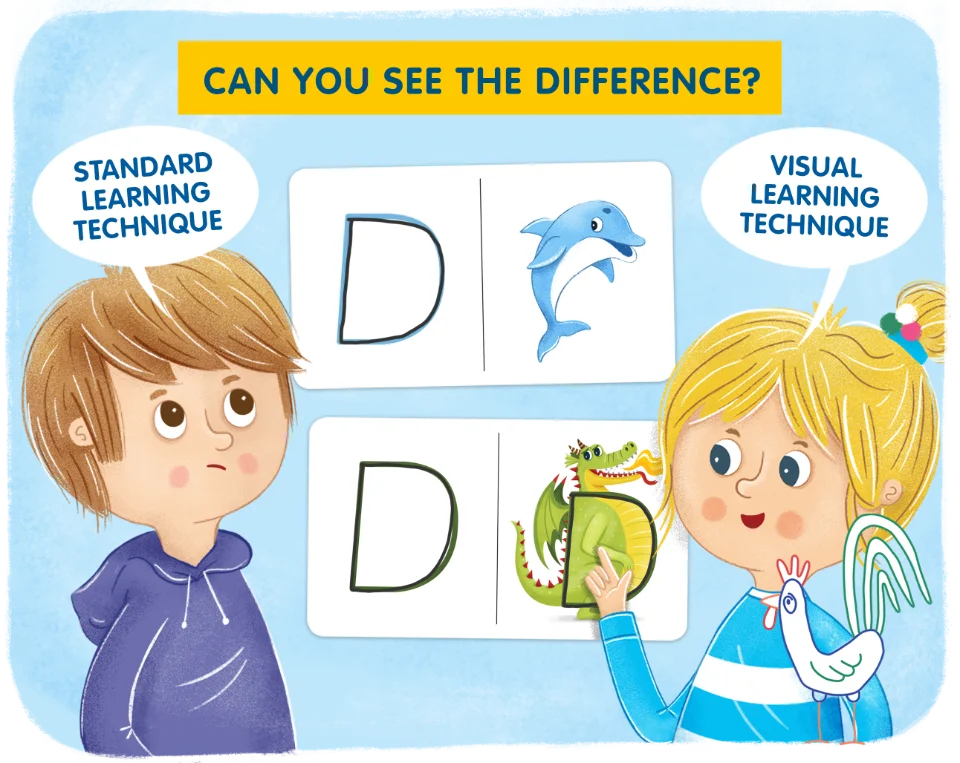
STANDARD TEACHING
It is very difficult for a child to associate the word pear with the letter if the child does not yet have a sufficiently developed phonological awareness, i.e. the ability to be aware of the first and last syllables of a word. This means that it is difficult for the child to learn the letter on the basis of phonological correspondence alone if he or she does not “hear” (identify) the letter itself at the beginning of the word pear.
ZIMOVA SYSTEM / VISUAL LEARNING TECHNIQUE
It is very effective and useful if another feeling, namely sight, is also included when learning the alphabet. However, this is possible if there is a visual match between the letter and the picture – for example G for Globe (see picture – the shape of the letter and the picture itself are a visual match). The child can imagine (visualize) the picture and then associate it with the shape of the letter.
ZIMOVA SYSTEM greatly supports the child’s gradual acquisition of phonemic and phonological skills.